PoolServer
This page introduces the PoolServer — a compact, intelligent control solution for modern pool and pool-deck automation.
The PoolServer is a rugged, waterproof control unit powered by 24V. It generates precise PWM signals to drive tube motors or dedicated pool-deck motors with high efficiency and reliability. Designed for flexibility and ease of use, it brings professional-grade automation into a compact and cost-effective package.
Control is effortless. The PoolServer can be operated using a 433 MHz remote control and/or through a modern user interface on a phone, iPad, or PC, using either the customer’s WiFi network or the PoolServer’s built-in access point.
Key features are fully configurable, including maximum motor current, start and end positions, and over-the-air software updates. The system is designed to support motors with currents up to 40A, while the AquaDeck application shown here requires approximately 1A.
A compact alternative for AquaDeck installations
For this particular AquaDeck installation, the PoolServer provides a simpler system architecture with fewer components and less cabling:
- The approximately €1,850 AquaDeck ECB near the pool is no longer required. Instead, the installation uses an off-the-shelf 24V Mean Well power supply together with the compact PoolServer located close to the motor.
- The approximately €240 surface-mounted Roldeck key switch is replaced by wireless remote control. Up to five remote controls can be added easily.
- Instead of six shielded signal wires running between the ECB and the pool, only two wires carrying 24V are required to reach the PoolServer.
- By processing the position sensor signals locally, close to the motor, the PoolServer minimizes the possibility of signal degradation over longer cable runs. This was one of the main design considerations behind the PoolServer architecture.
- Following a mains power interruption, the PoolServer retains the deck position using a built-in short-term UPS combined with long-life non-volatile memory. This helps avoid unnecessary position recalibration after a power failure.
The result is a compact installation with less cabling, fewer external components, lower system cost, and an intuitive user experience.
Real-time visualization and control
The PoolServer provides a real-time animation based on position sensor data and live motor-current measurements. This gives the user a realistic visual representation of the deck’s current position and the action being performed.
In addition to the wireless remote control, the deck can be operated directly using the on-screen controls in the user interface, providing convenient access from a phone, tablet, or computer.
For service and technical teams, detailed system information and diagnostics are available. Advanced configuration options allow the system to be fine-tuned during installation, maintenance, and servicing.
Compact integration
In this demonstration, the pool deck is shown opening in real time. The PoolServer — the compact black control unit — controls a separate motor in this installation, but it can also be used to control a tube motor.
Despite its advanced functionality, the PoolServer is extremely compact. It is small enough to fit inside the AquaDeck Roldeck Aquamat 120 Nm motor unit.
No mechanical modification of the Aquamat 120 Nm is required for this integration. In this particular installation, we also replaced the original position sensor with our own sensor PCB to provide local position detection optimized for the PoolServer architecture.
Professional PCB design and manufacturing
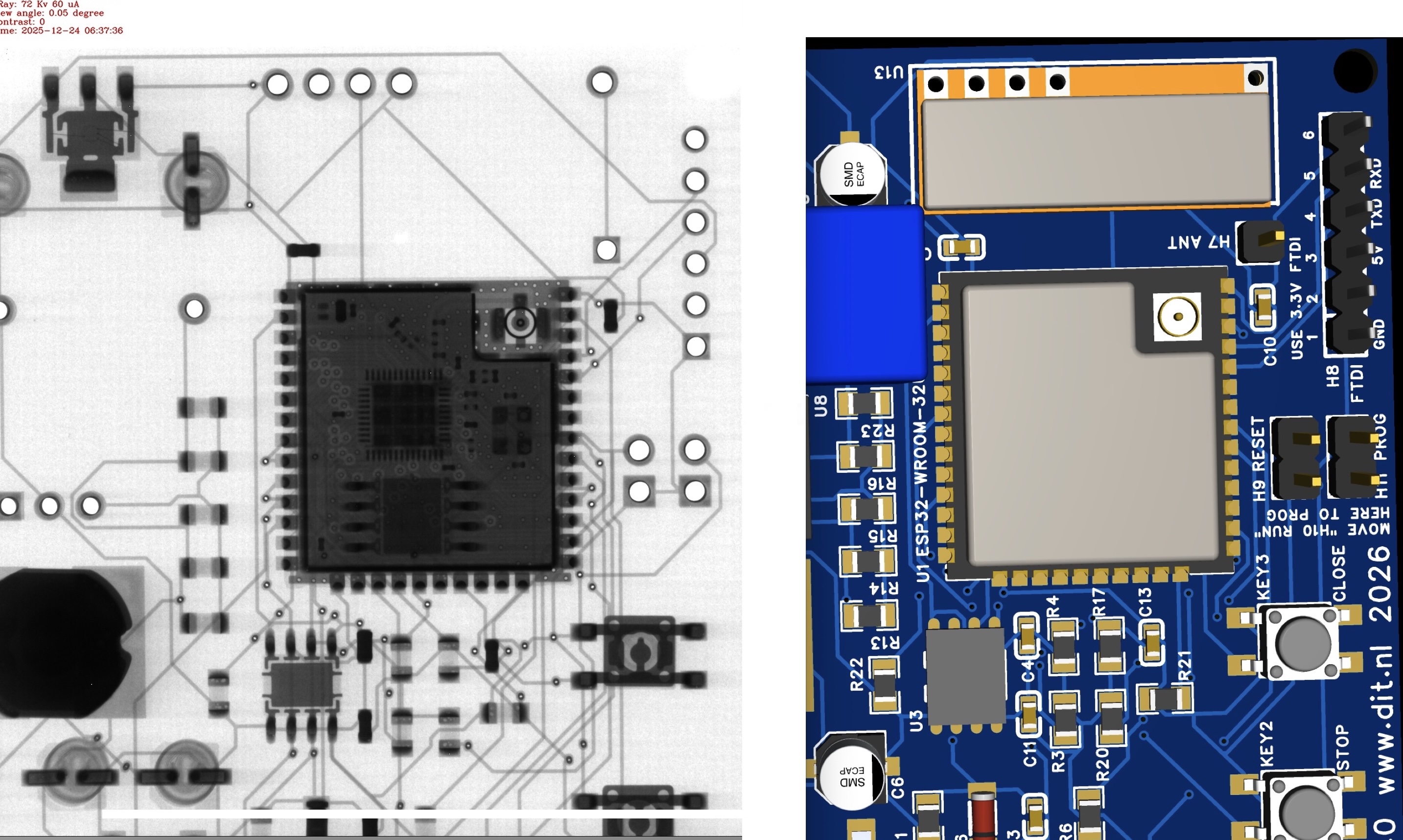
The PoolServer PCB is shown together with an X-ray inspection image (left) and the corresponding schematic drawing (right).
The X-ray inspection provides an additional view of the PCB assembly and demonstrates the attention given to manufacturing quality, component placement, and reliable electrical connections.
Compact, connected and reliable
The PoolServer is designed to be both compact and powerful.
It features 433 MHz communication, WiFi connectivity, and Bluetooth capability (currently unused in this application).
The PoolServer continuously tracks and stores the deck position, even during a mains power failure. If power is lost while the deck is moving — including at full speed — the built-in backup power keeps the position-tracking electronics operational while the motor and deck come to a stop. The final position is then safely stored in long-life non-volatile memory.
As a result, the PoolServer still knows the exact deck position when power is restored, eliminating the need for recalibration after a power failure.
Position sensor
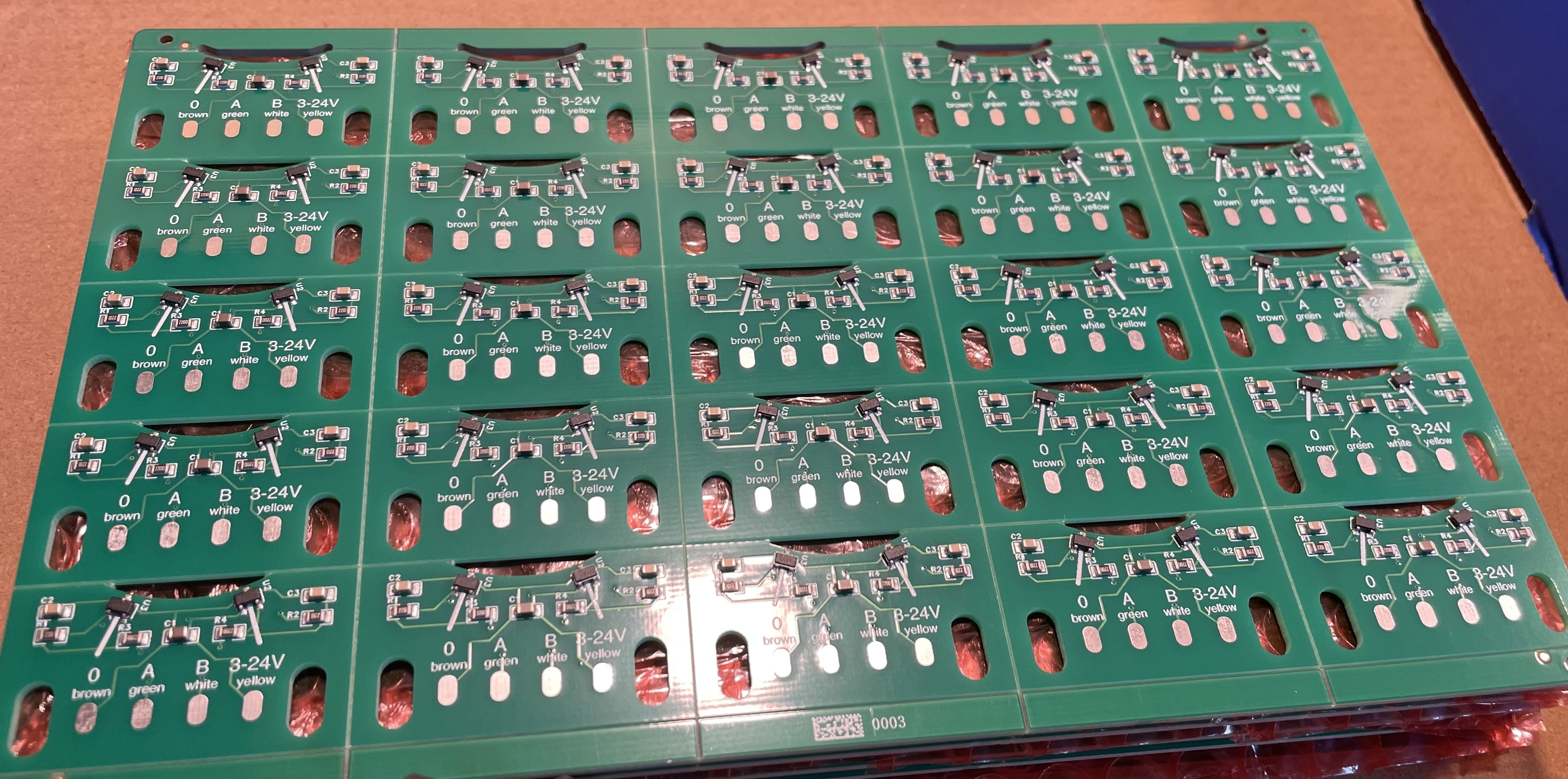
Inside the motor unit, a compact PCB detects the motor position. The system uses Hall sensors in combination with a rotating disk containing magnets to provide precise and reliable position feedback.
For this particular installation, we also supplied our own position-sensor hardware. This provides a compact alternative to the original AquaDeck sensor arrangement and allows the position detection to be integrated directly with the PoolServer.